Adel Vafin on the trends shaping medicine in the South in 2024
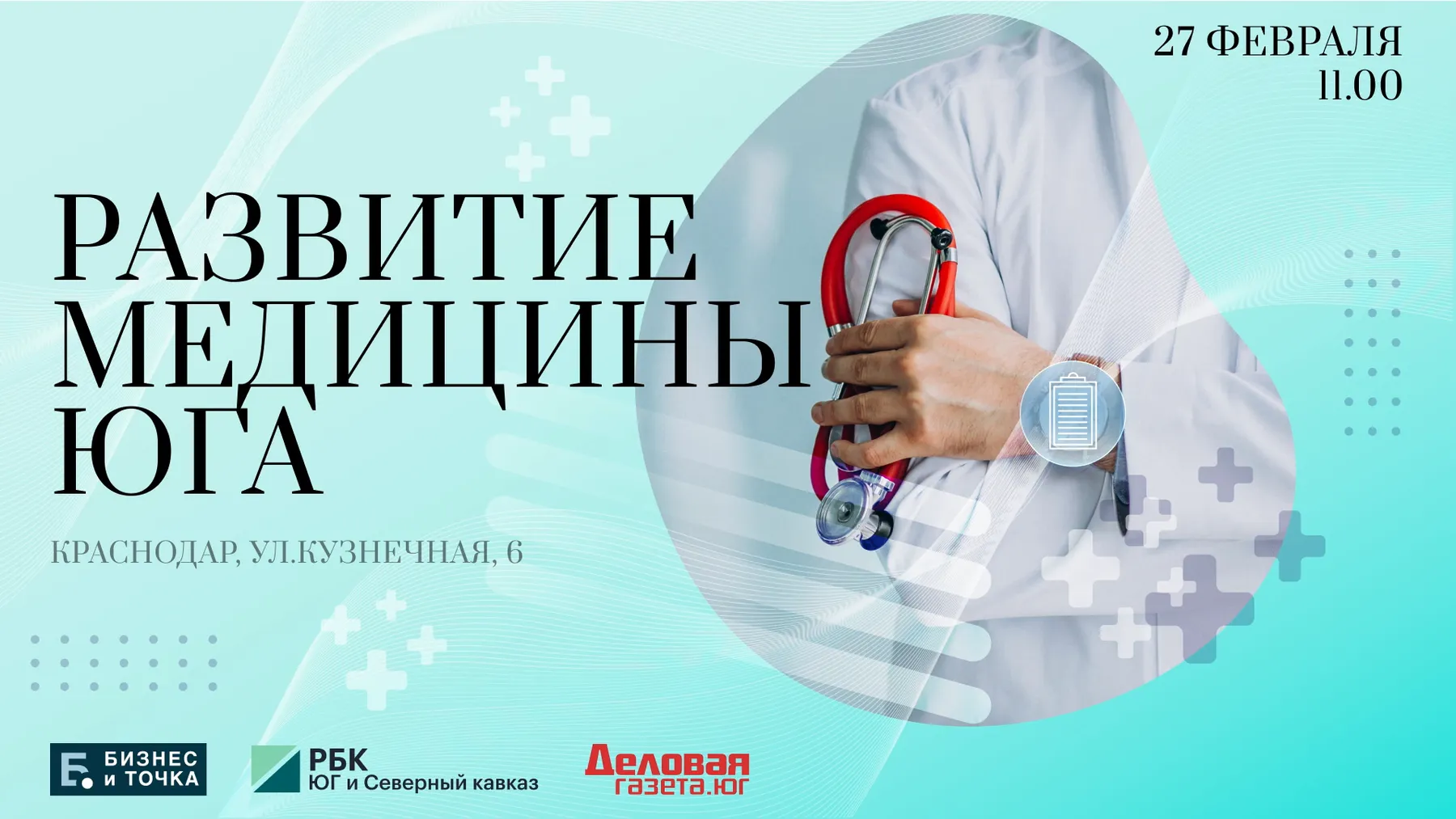
Developing the national healthcare system is impossible without close interaction between state and private medicine. State hospitals have broader powers and capabilities in specialised care, including high-technology care, while private providers have greater scope to improve access to primary consultative and diagnostic care. This was stated by Adel Vafin, General Manager of LeePrime medical, at a round table organised by RBC Yug and the North Caucasus.
"On the whole I have always looked with envy at the approaches taken in Krasnodar Krai. In particular, building a new regional hospital and equipping it with the most modern technology. That is unquestionably the right direction, but when you have not one, not two, not three or four but seven or eight high-technology hospitals, you understand perfectly clearly that every 8 years you need to find no less than 20 million euros to re-equip and re-fit them. And if in 2010 that was 800 million roubles, today it is 2 billion roubles. And that sum will not shrink, it will only grow. Even back when I worked in the state healthcare system, I began thinking about how to attract non-state investment to maintain hospitals that are so expensive to operate, maintain and renew," the expert said.
In his view, without involving private ownership it is very difficult to develop healthcare effectively and to reach national goals in disease prevention. At the same time, private medicine has taken a very large step forward in terms of technological equipment. There are large private clinics fitted with the most modern equipment and operating theatres, with first-class surgeons who perform the most complex operations.
In Vafin's view, the future of private medicine lies in prevention and the early diagnosis of disease.
"A private provider has more scope to practise personalised medicine. And what scope is there for personalised medicine in a state polyclinic, if 12–15 minutes are allotted for an appointment, and in that time you have to carry out a full examination of the patient in order to be able to detect, among other things, visible cancer sites? In the same time you also have to fill in the medical paperwork. In that respect the private healthcare system has very great potential," the expert noted. If a private clinic diagnoses cancer in a patient, it must pass that information to the state healthcare system as quickly as possible, since, owing to a whole range of restrictive measures, all the main functions for treating and monitoring cancer patients now rest with state hospitals.
"The main potential is early diagnosis. If a private provider has detected a pathology, it must hand that information to the state system as quickly as possible. Because the state has set very serious restrictions on how oncological care is organised. The most important thing is follow-up monitoring after specialised care has been given, and that can be effectively organised in a private medical centre as well," Vafin concluded.
Source: https://kuban.rbc.ru/krasnodar/freenews/65dddaea9a7947fe0c66eb2e